Hormones as Proteins

Image source: Wikipedia.com

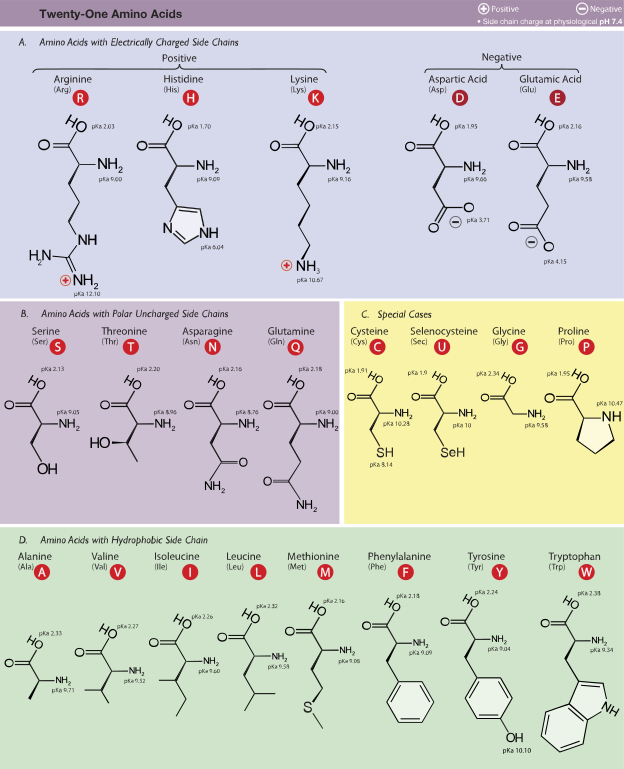
Most hormones are proteins, which are chains of amino acids. Just like the proteins you find in your eggs and meat that you may be eating on a daily basis, especially for you lot of athletes out there. Don't forget though, hormones can be classified as steroids too, which typically aren't allowed in sports!

Those marketers for growth hormones tried to market something that incites the production of amino acids. Bovine somatotropin, also known as bovine growth hormone (BGH) are for cows, like other hormones, it is produced in small quantities and is used in regulating metabolic processes. Porcine somatotropin are for pigs, which provides more rapid growth and a greater proportion of muscle to fat on less feed. Again, don't even think about trying this for yourself! They definitely will not work and it won't be a surprise that they will be harmful.

There are many other hormones out there and they control many different things, like thyroid controls metabolism. So this is absolutely essential for athletes to be aware of their metabolism. You would want a higher metabolism if you want your body to process things at a faster pace, and lower metabolism for a slower pace.

Examples of Hormones

The prolactin hormone is responsible for the formation of milk.

The somatotropin hormone is what's called the "growth hormone", as evidently from the description, is responsible for growth.

Sandy Allen was the worlds tallest woman.

Image source: Wikipedia.com

Robert Wadlow was the tallest around 1918 to 1940 which was the years he managed to live. He died at an early age because it is always hard for the body to sustain such a large size. Acromegaly is excessive pituitary hormone, which leads to abnormal bone growing. Likewise with "Andre the Giant", he died from heart failure.

Human growth hormone did exist as a medication. Sometimes it was used to treat the medical or genetic condition that results in an adult height of 4 feet 10 inches. Research has been done where they injected growth hormones in old people. The consequences included an increase in blood pressure and plasma glucose. Other side effects included carpal tunnel syndrome as well as breast enlargement. As a whole, no measurable improvements in muscle function or physical performance were observed in spite of improved muscle-fat distribution. We can safely say that trying this as an athlete to try to improve your performance will NOT work out well!

Not surprisingly, it is illegal now because of the aforementioned consequences.

Hormone: "Stir into action"

I apologize for the short break as I was away, busy traveling. Fear not, I am back to guide you on your well-being for all you athletes out there. I am going to make this post packed with extra information for you all as compensation!

We are in the year 1902 and Ernest Starling injected ground duodenum, which is the connection of the small intestine to the stomach, into the jugular vein of a dog. Just within seconds, he was able to note the flow of pancreatic juice - just exactly like what happens when a dog consumes food! This, as we know today, is/was called "Secretin".

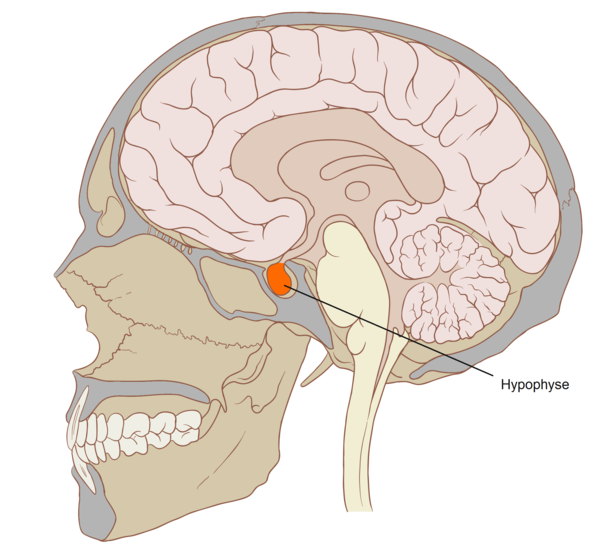
The word 'hormone' actually comes from Ancient Greek, which means to "stir into action", traveling through the blood stream. The endocrine system comprised of endocrine organs responsible for hormones. For example, the hypothalamus & pituitary in the brain, and our kidneys for mineral balance.

Image source: Wikipedia.com

As introduced just above, the primary conductor of the endocrine system is our pituitary gland. It typically produces a millionth of a gram of hormones per day, that is, 1 micro-gram. This minute amount leads to dramatic physiological effects on your body so it is absolutely crucial for the functioning of your body. Your body's performance will be severely hindered if there's something wrong with the pituitary gland! The gland is responsible for the cascading hormonal effect that releases to the other glands throughout your body.

We will talk about common types of hormones in your body next. But remember, as you read above, bigger is not always better!

False Claims and Myths


In the year 1889, a man by the name of Charles Brown-Sequard decided to inject himself with macerated dog testicles as well as monkey glands on several occasions. His claims were that he actually felt better. I, among many others, highly doubt his testimonials.

Sir Arthur Ignatius Conan Doyle, the famous Scottish physician and writer, had also written one of his Sherlock Holmes books about "The Adventure of the Creeping Man".

John Romulus Brinkley, an American, was apparently a "specialist in rejuvenation", or so he claims to have been. He was interested in the horny nature of goats. His claims were that there were effects that resulted from the insertion of goat testicle parts into men, of which several of such tests were actually conducted. Needless to say, none of these ridiculous trials had any actual affect!

Image source: Wikipedia.com

We come to the year 1895, where adrenalin was extracted and injected into animals which showed signs of increased blood pressure.

I will continue my discussion in my next few blog posts, where I will begin to explain more on the role of hormones and less about the past history of this discovery.

Human Autopsies Show Signs of Hormones

Image source: Wikipedia.com

The year was 1855 when Thomas Addison was conducting autopsies on humans. He noted that people who had atrophied adrenal glands, meaning shrunken adrenal glands, had shown signs of poor appetite, low blood pressure, weakness, anemia and a bronze coloring of the skin. From these patterns he had observed, his conclusion was that the adrenal gland must have been releasing something that prevents these symptoms in the first place. He was indeed correct as our society today now knows that this was the case with the adrenal glands in humans.

Dolanski, in the year 1894, was the one who laid out the foundation for hormones. Mr. Dolanski tried to insert acid into the rectum of a dog, into it's intestine, in order to stimulate digestive juice acids. This didn't work. What was the reason? The reason was that it was the hormones that needed to do the trick in order for it to work properly.

Hormones In The Darkness

After John Hunter, it wasn't until over 50 years later that there was a substantial advancement in the area of hormones. Keep in mind that at this point, the discovery of the concept of hormones were still not yet uncovered and that scientists across all around the world were still in the dark about this subject matter.

Image source: Wikipedia.com

In 1849, a man by the name of Arnold Berthold followed suit with John Hunter's previous experiments and made some new discoveries of his own.

Arnold castrated roosters as well but this time, he returned a testicle back into the body cavity of the corresponding castrated rooster. This led to the rooster showing normal sexual behavior and comb development. As a conclusion, the result was that the testes must have released something into the blood of the rooster. Now today, as we know, the consequence that was seen through this experiment was the responsibility of hormones.

Hormones For Your Wellness

It is important to have a good understanding about our hormones in our body. Hormones play a huge role in your body's functions. They are responsible for everyday functionality of many things that happen in your body - primarily with your organs' operations. For example, Multiple Endocrine Neoplasia (MEN) can result in symptoms of:

  • Excessive growth throughout your body
  • Visual problems (which the pituitary gland is partly responsible for)
  • Low blood sugar levels ( which the pancreas gland is partly responsible for)
  • Soft skull parathyroid

Over the next few blog posts, I will try to cover the following key questions that pertain to our bodies:

  • What are hormones?
  • What problems are associated with hormone imbalance?
  • What treatments are available?
  • Are hormones used for any other reason than to correct an imbalance?
  • What are the risks and benefits of hormone treatments?

John Hunter, who lived from 1728 until 1793, conducted primitive experiments regarding hormones at a very early stage, long before hormones were discovered properly. Mr. Hunter castrated roosters and observed the unusual shrinking of their combs.

We will continue our look into the historical discovery and understanding of hormones in my next blog post! :)