Allergies

An allergy is any adverse reaction to substances that are normally harmless where IgE (antibodies) are involved. Around 10-20% of our population suffers from allergies. In terms of anaphylaxis, this refers to a rapidly progressing, life threatening allergic reaction, whereas atopy/atopic refers to the genetic tendency to develop the classic allergic diseases - for example atopic dermatitis, allergic rhinitis (hay fever), asthma, food allergies, etc.

Image source: Wikipedia.com

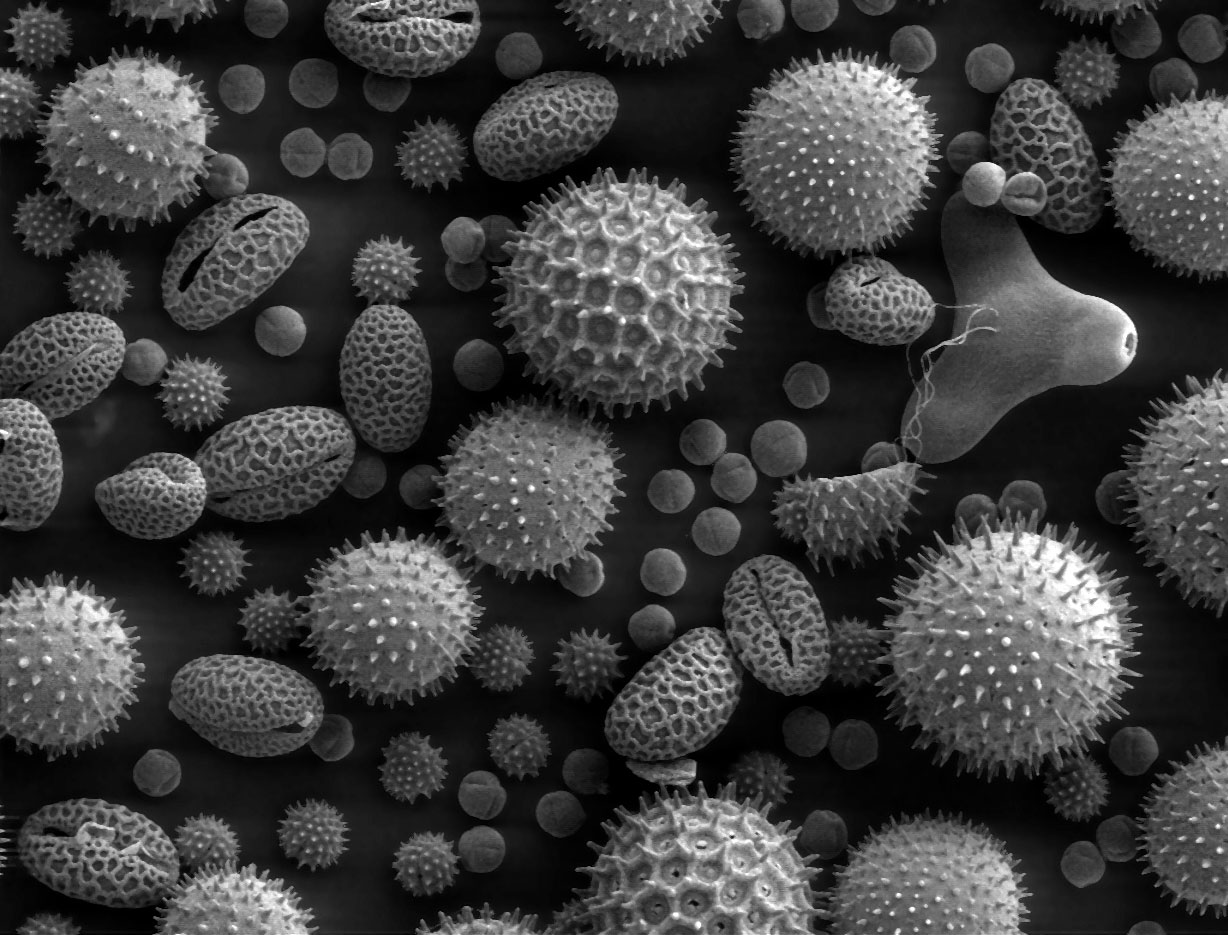
Hay fever, which does not refer to being allergic to hay, but rather being allergic to the pollen of ragweed in most cases. Hay fever may progress to asthma in up to 50% of people. Symptoms include a runny nose, sneezing, and tearing of your eyes.

Proteins in dead skin cells of animals can be a source of allergies too. Black cats are more allergenic than white cats apparently. Do keep in mind that cats can also bring around pollen and other things along with it! It tends to be the case that the longer the hair or fur, the more there is of the spreading of the dead skin cells.

Sport Stacking - Conclusion

This ability to bestow intrinsic value upon extrinsically useless activities was what gave rise to the notion of sports in the first place. Perhaps someone found a coconut and thought it might be fun to kick it around, then other people joined in and some rules were made up so everyone knew how to play, and so the new game could be taught easily. The Greek city states decided it would help relations with one another to hold a series of competitive events, and thus the Olympics, the most famous and prestigious sporting event of all time, was born. Not because it was productive for mankind, but because mankind decided it would be productive.

Image source: Wikipedia.com

When you think about it, kicking a ball around a field, throwing a ball into a suspended hoop, or striking a ball with a long stick in an effort to get it into a tiny hole in the ground are all ideas no more or less absurd than anything else we've come up with. Sport stacking seems strange at first, but it’s popular enough to boast its own world record, as well as some dexterously talented young competitors. Their collective involvement in this exhibition of a pointless skill has evolved it into a sport in its own right, giving it the intrinsic value we humans are so good at creating!

Sport Stacking - More Thoughts

I gave it some more thought. Humans participate in an array of activities that are inherently valuable. Eating, for example, is valuable because it provides our body with the fuel it needs to continue functioning. But we are also inclined to engage in many more activities that have no significant extrinsic value. The reason we acknowledge that these activities have value is because a group of people decided that it did. We bestowed intrinsic value on literally thousands of pointless activities.

Image source: Wikipedia.com

Artists make art, but it isn't because their creations have a point. Artists create because, thousands of generations ago, our ancestors climbed down from the trees and decided that drawing on the rough stone walls of the caves where they dwelt was a productive use of their time. They took a useless activity and gave it usefulness and meaning, and that meaning went on to inspire new generations of artists. Humans would begin to experiment with new ways to make art, new surfaces upon which to draw, and each new artist would add something to the collective value of art as a whole.

Sport Stacking

I recently discovered the talent of Steven Purugganan, a fifteen year old boy who holds a world record for the fastest cup stacking. Upon further investigation, I found that cup stacking, or 'Sport Stacking' as it’s more often referred to in the business, is actually an international sport - complete with international tournaments, strict rules and their own governing body, the World Sport Stacking Association (The WSSA).

My first reaction, upon watching Purugganan stack his Dixie cups over and over was, “Wow, this kid is really fast!” My second reaction was, after a few seconds of consideration, “Is this kid really spending the better part of his life stacking cups?” My instinct was to declare this practice an utter waste of time, nothing more interesting than a party gimmick or weird talent that gets you featured on page four of a local newspaper. Simply because it was new and unusual, I wanted to dismiss sport stacking...

A Mix of Other Hormones & A Bit More on Thyroid

Just to wrap up on thyroid, the parathyroid gland, with 'para-' meaning 'just beyond', together with thyroid regulates calcium and phosphorous metabolism (related to bones). Calcium in intestine together with Vitamin D will be plasma calcium, which is regulated by our kidneys. Calcitonin, which is produced by the thyroid gland, is crucially related to our bones. Parathyroid hormone (PTH) or just parathormone, is produced if this process doesn't take place, so bone gets dissolved into plasma calcium into the blood. Additionally, too much parathormone leads to kidney stones from the calcium deposits in our kidneys. You don't want to have to go through surgery for this! Beware!

As I had touched upon earlier, Thomas Addison conducted research in adrenal insufficiency in 1855 and he was the one who came up with Addison's disease. Recall that this results in weakness, loss of appetite, nausea, vomiting, and hyper-pigmentation.

Image source: Wikipedia.com

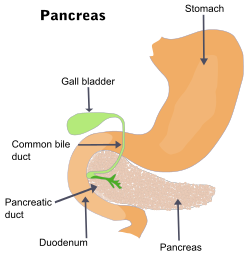
Moving on to the pancreas. The pancreas is responsible for producing insulin. Banting, Best, and Macleod were the 3 people responsible for the discovery of insulin. Type I diabetes cannot be cured, but can be treated using insulin. Type II diabetes, well, your best bet is to lose weight as soon as you can!
Hypothyroidism & Hyperthyroidism

As we introduced hypothyroidism in our last post, what that really entails is an under-active thyroid gland. If this is the case, the thyroid gland grows into a large physical size and this is called a goiter. Goiters can also be caused by a lack of iodine, of which the thyroid gland needs in order to function properly. There has been cases of cabbage goiters too.

Cretinism is whereby an under-active thyroid gland in children can affect the brain too.

Now we take a look at hyperthyroidism. This, by the hyper- term, you can tell that it works the opposite way as hypothyroidism. Hyperthyroidism can cause the following:

  • anxiety
  • nervousness
  • rapid pulse
  • fatigue
  • weight-loss (Graves disease, protruding eyes)


Treatment of hyperthyroidism is rather simple. You want to block the formation of the thyroid hormone, or in the case of too much iodine, you could use radioactive iodine (I-131) to permanently destroy iodine. In other cases, surgery might be the solution. I hope that isn't the case for anyone who suffers from this!

More on Hormones & Functions

Adrenocorticotropic hormone, or abbreviated as ACTH, is related to the adrenals, which produces aldosterone, cortisol, corticosterone, etc. Corticosteroids protect your body from things like infection, exertion, allergic reaction, and more. Hydrocortisones can act as immunosuppressants. Inflammation can be dealt with hydrocrotisone. Other things include:
  • redness
  • swelling
  • warmth
  • pain
Corticosteroids can be used to treat asthma, allergies, rheumatoid arthritis, lupus, crohn's disease, and more.

Image source: Wikipedia.com

However, overabundance of cortisone in the body may result in Cushing's syndrome, named after Harvey Cushing who lived from 1869 to 1939. The symptoms include:
  • moon face
  • buffalo hump
  • weak bones and muscles
  • easily bruised skin
  • peptic ulcer
  • diabetes
  • high blood pressure
Other common hormones include follicle stimulating hormone or FSH, thyroid stimulating hormone or TSH, and more. As I've mentioned in my previous blog posts, thyroid controls metabolism. So it is crucial to maintain this. Symptoms of hypothyroidism can include the sensation of sluggishness, a slow heart rate, a tendency to obesity, and cold skin. So if you have any of these symptoms and you aren't eating a proper diet, then you might want to get yourself checked out by someone like a physician as soon as possible!